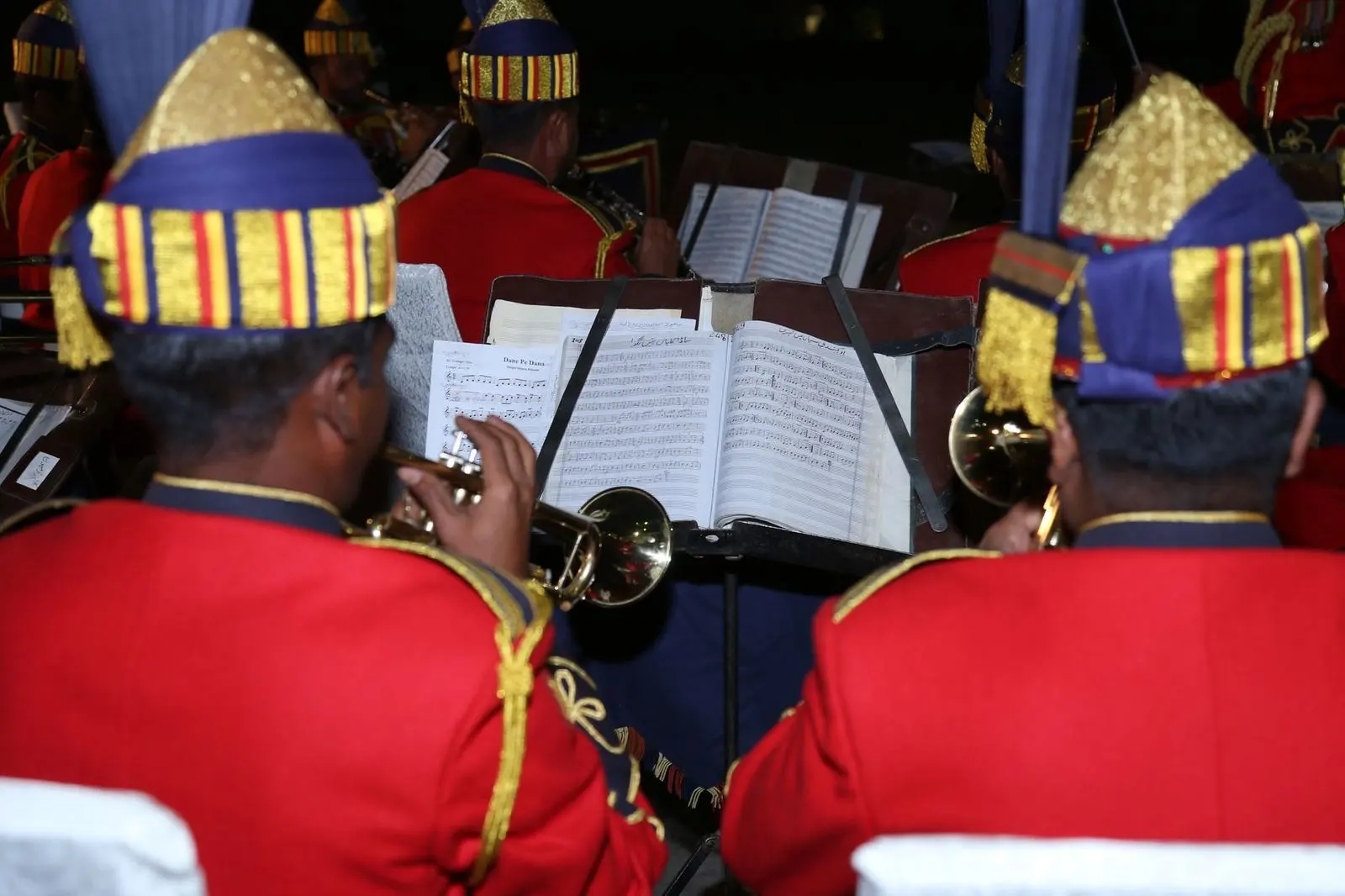
Choosing between a trumpet, trombone or tuba, or just curious how they work? Brass instruments all make sound the same way: you buzz your lips into a mouthpiece, and a tube, valves or a slide set the pitch.
This guide sits inside our wider overview of musical instruments, so treat it as a close-up on one family.
| Item | Value |
|---|---|
| Sound source | Vibrating (“buzzing”) lips of the player |
| Valves on most modern trumpets | Three |
| Tenor trombone range | Concert E to F three octaves higher |
| Straightened B♭ tuba tube | Close to 18 feet long |
| Tuba invented | 1835 |
| First metal trumpets (ancient Egypt) | Starting in 1500 BC |
These figures come from Yamaha’s guide to the brass family and Acoustics Today. Figures can change as sources are revised, so check the sources before you rely on them.
What makes an instrument a brass instrument?
The name is misleading. Acoustics Today explains that the material does not decide membership: what classifies an instrument as brass is that its sound begins with vibrations of the player’s lips.
Builders have used a wide range of materials over time, and the same article lists wood, shell, animal horn, ceramics, tree bark, various metals, plastic and even human bones. Most modern instruments, though, use brass tubing, a detachable mouthpiece at one end and a flared bell at the other, as Yamaha describes.
Yamaha names these as the most common members of the family:
- Trumpet
- Cornet
- Flugelhorn
- Trombone
- Tuba
- Euphonium
- Baritone horn
- Alto (tenor) horn
- French horn
Like the woodwind instruments, they belong to the wind category, but a woodwind player blows into a headjoint, mouthpiece or reed while a brass player buzzes against the mouthpiece, per the Yamaha guide.
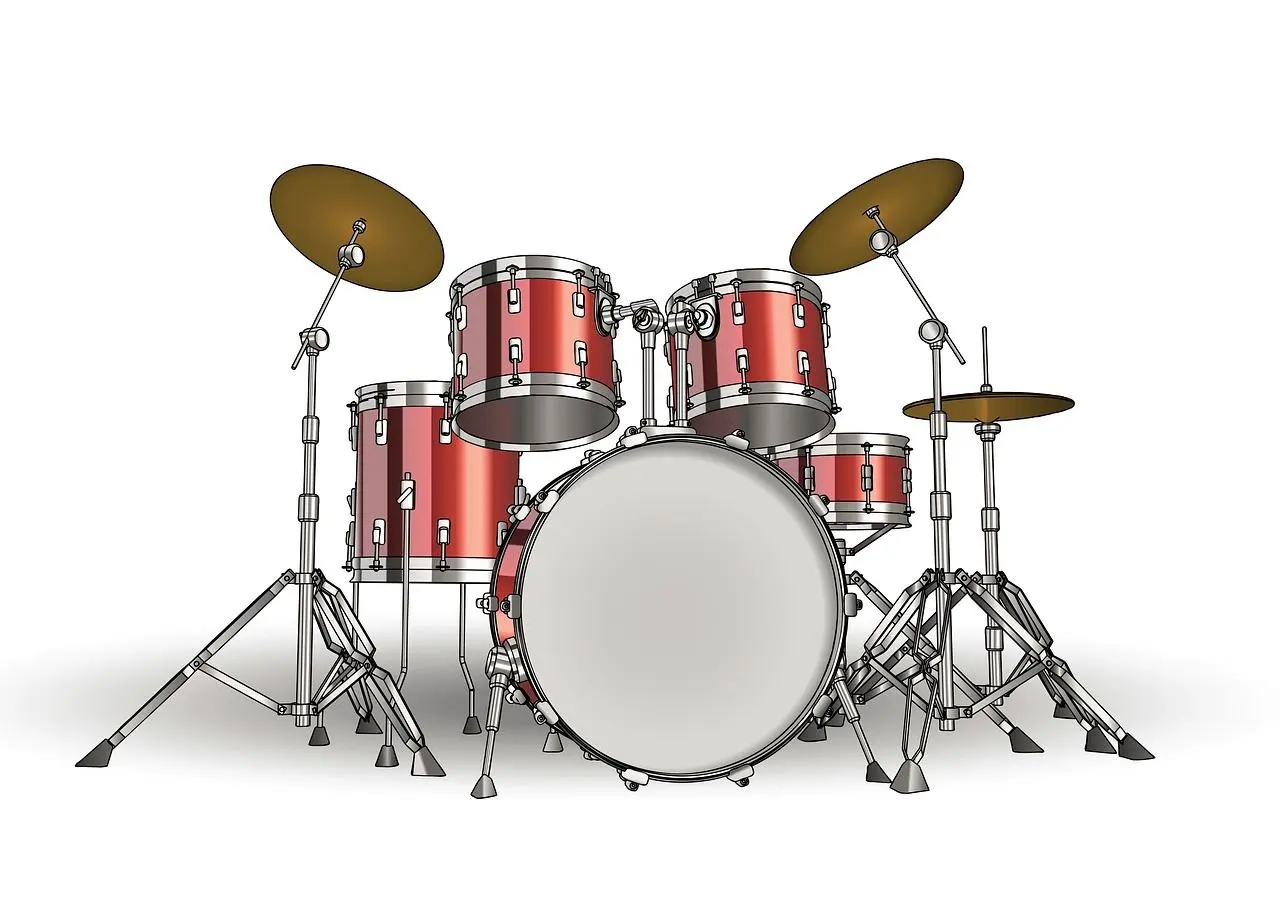
Stanford’s CCRMA course notes group all winds as instruments that start their vibrations directly in air rather than through mechanical vibrations passed on later. For a contrast in how sound begins, compare them with percussion instruments.
How do valves and slides change the pitch?
A player’s lips can only reach so many notes on their own, which is why valves matter. Yamaha explains that an open valve lets air flow into a supplementary tube, which extends the total tube length and lowers the pitch.
The Stanford notes say the same thing from the acoustics side: pressing a valve connects the main air column to an additional piece of tubing. Players also adjust their embouchure, the intensity of lip vibration, to reach the full range, according to Yamaha.
Two valve designs are in use:
- Piston valves work vertically: press down and the valve opens, release and it closes.
- Rotary valves use a lever that turns a circular rotor, opening channels into extra tubing.
Yamaha adds that piston valves are generally considered more precise and rotary valves smoother. It notes one exception to valves, the slide trombone, where the player manually extends and contracts a sliding tube.
Trumpet, cornet and flugelhorn
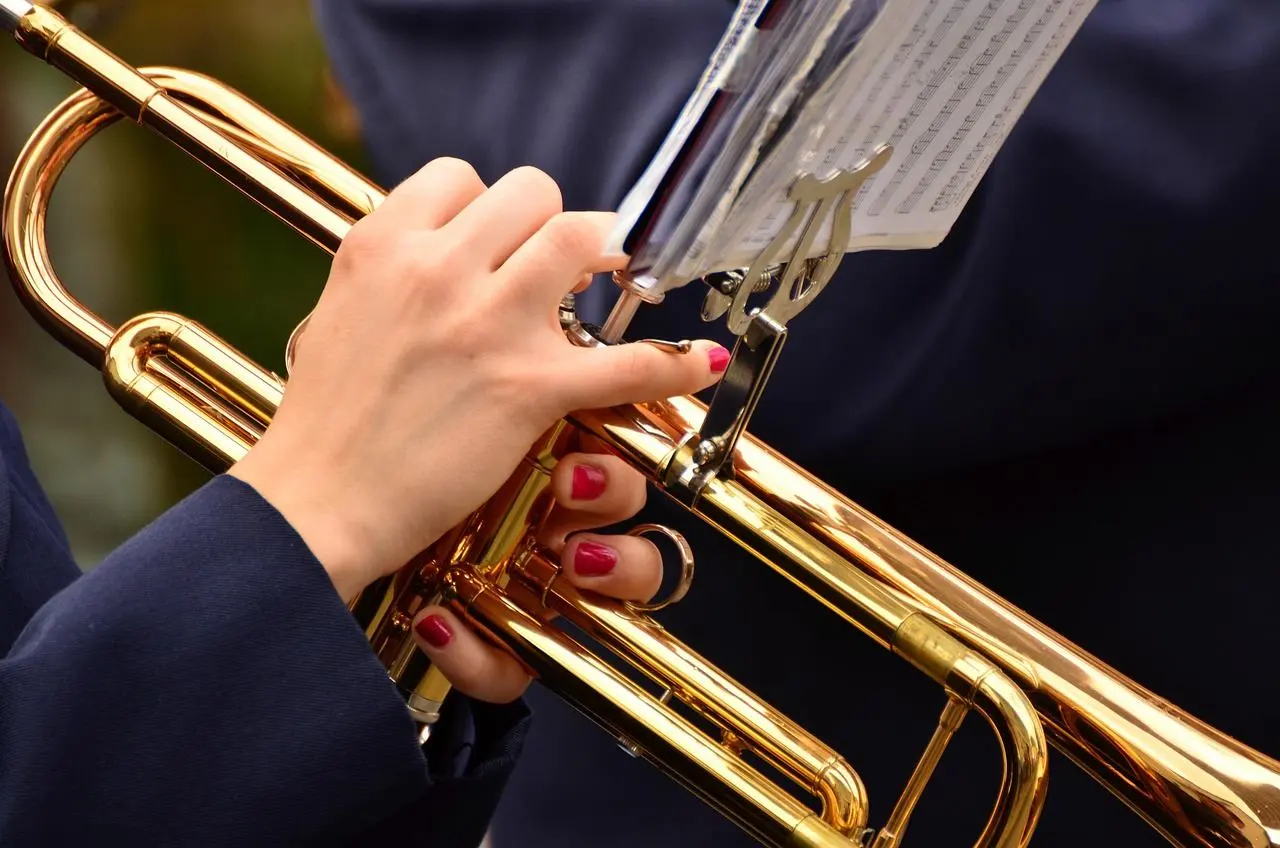
The trumpet has ancient roots. Yamaha cites archaeological evidence that the first metal trumpets, made of silver or bronze, were used by the ancient Egyptians starting in 1500 BC, mainly for military signaling or religious ceremonies.
Most modern trumpets have three valves. Per the same Yamaha guide, the first valve lowers the pitch by a whole step, the second by a half step and the third by one-and-a-half steps.
Its close relatives differ mainly in bore shape and tone:
- Trumpet: the most common modern version is the B♭ trumpet.
- Cornet: a more conical bore gives a mellower, rounder tone than a trumpet.
- Flugelhorn: an even more conical bore than the cornet, with a mellower tone still.
All of these come from the Yamaha overview, which also says flugelhorns turn up in jazz, brass bands, marching bands and orchestras.
Trombone: the slide that glides
According to Yamaha, the first known use of the trombone, originally called a “sackbut,” was in 15th-century religious music. It later spread into classical and popular music.
The slide is what sets it apart. Using it, a trombonist can glide smoothly between notes, allowing legato phrasing that Yamaha calls unique among brass instruments.
Most trombones in use are tenor trombones, with a range from Concert E to F three octaves higher. Bass and alto trombones also exist, and valve trombones, which are much less common, use three or four piston valves instead of a slide.
Mouthpiece size matters too: Yamaha says smaller mouthpieces give a brighter sound and make high notes easier to reach.
Tuba and the low brass
The tuba is the newcomer of the family. Yamaha reports it was invented in 1835, and that it is the lowest-pitched and largest brass instrument.
Straighten out the tube of a B♭ tuba, the most common version, and it would be close to 18 feet long, according to the same source. It also has the widest bore in the family, which helps it produce low notes.
That low range explains its job: bass parts in orchestras, marching bands and other brass ensembles. In traditional New Orleans jazz and ragtime bands, Yamaha notes, it often stands in for a stringed bass.
The euphonium, baritone horn, alto (tenor) horn and French horn belong to the same family. The sources used for this guide say little about their design, so check a dedicated resource for those.
How the lips, air column and bell shape the sound
The Stanford CCRMA notes name three principal components of a brass instrument:
- The air column, which acts as the waveguide.
- The player’s lips and mouthpiece, which are the excitation source.
- The bell, which handles radiation of sound.
The lips behave like a pressure-controlled valve, admitting a puff of air whenever pressure in the mouthpiece is high. The player tunes how fast they vibrate through tension and mass.
The bell matters because the open end of a straight pipe is an inefficient radiator of sound, especially at low frequencies. The same notes add that the wall material generally has a negligible effect on playing behavior.
Frequently asked questions
Is a saxophone a brass instrument?
Show answer
No. Acoustics Today points out that a saxophone is made entirely of brass yet sits outside the family, because the lips are not what drives its sound. Source: Acoustics Today.
Which brass instrument suits a beginner?
Show answer
Yamaha describes the cornet as a good first instrument for students, since it is compact and easy to hold. It adds that valve trombones are somewhat easier for student trumpeters to pick up than the slide version. See the Yamaha guide.
Do all brass instruments have valves?
Show answer
Nearly all of them do. The slide trombone gets by with a telescoping tube you move by hand, so nothing is pressed at all, as the Yamaha guide lays out.
What does a mute do?
Show answer
A mute alters how the bell radiates sound. Stanford’s notes say it cuts low-frequency output much more than high-frequency output, and that different mute styles either pass frequencies above a limit or emphasize a certain band. Details are in the CCRMA lecture.