Ever wondered why a drum and a xylophone share a family? You’ll find the answer here: percussion instruments are sounded by being struck, scraped or shaken, and they split into pitched and unpitched kinds.
This page sits inside our wider guide to musical instruments.
| Item | Value |
|---|---|
| Hornbostel-Sachs first published | 1914 |
| English translation published | 1961 |
| Hornbostel-Sachs system updated | 2011 |
| Top-level classes in Hornbostel-Sachs | five top-level classifications |
| Size of the Hornbostel-Sachs system | over 300 basic categories |
| Pitched versus unpitched split in Hornbostel-Sachs | None at any level |
The figures come from Wikipedia’s pages on Hornbostel-Sachs and the classification of percussion instruments. They can change, so check the sources before you rely on them.
What counts as a percussion instrument?
A percussion instrument is sounded by being struck or scraped with a beater, or by rattles and similar parts struck, scraped or rubbed by hand or struck against another similar instrument. That is how Wikipedia’s entry on percussion instruments defines it.
Setting aside the human voice and zoomusicological instruments, the percussion family is believed to include the oldest musical instruments, according to the same entry. The classification page adds that the family has possibly the longest history of any group of musical instruments.
The word itself comes from the Latin verb percussio, meaning to beat or strike, and the noun percussus, a beating, as that entry explains.
A player can set an instrument sounding in several ways, and the list of idiophones describes them as hitting, shaking or scraping:
- Hitting with a hand, stick or beater.
- Shaking a rattle so that its parts strike each other.
- Scraping a stick or surface.
- Clashing two matching pieces together, as with cymbals used in pairs.
Percussive techniques can even be applied to the human body itself, which is the idea behind body percussion, as the percussion entry notes.
Pitched and unpitched percussion
The split between pitched and unpitched percussion is a division of musical usage. It is the more modern version of the traditional split into tuned and untuned percussion, according to the classification page.
Notation shows the difference clearly. Music for pitched percussion can be notated on a staff with the same treble and bass clefs used by many non-percussive instruments, says Wikipedia.
Music for percussive instruments without a definite pitch can instead be notated with a specialist rhythm or percussion clef, per the same page.
- Pitched (tuned): the glockenspiel and xylophone, which sit in the keyboard percussion group, along with the marimba.
- Unpitched (untuned): auxiliary instruments such as the triangle and cymbals, where rhythm and colour matter more than notes.
Scientific classification ignores this divide altogether. Wikipedia notes that Hornbostel-Sachs does not distinguish between pitched and unpitched instruments at any level, so the label describes how you use an instrument, not what it is made of.
How percussion instruments are sorted by sound production
The most widely used scheme is Hornbostel-Sachs, devised by Erich Moritz von Hornbostel and Curt Sachs and first published in the Zeitschrift für Ethnologie in 1914. An English translation appeared in the Galpin Society Journal in 1961, and it is the most widely used system among ethnomusicologists and organologists, as the Hornbostel-Sachs page explains.
The system was updated in 2011 as part of the Musical Instrument Museums Online (MIMO) Project. It has five top-level classifications and over 300 basic categories in total, and it is modeled on the Dewey Decimal Classification for libraries, according to the same source.
Two of its top-level groups hold most of what people call percussion:
- Idiophones make sound mainly through the body of the instrument vibrating, rather than a string, membrane or column of air. The group includes the xylophone, the marimba, the glockenspiel and the glass harmonica, and in essence covers all percussion instruments apart from drums.
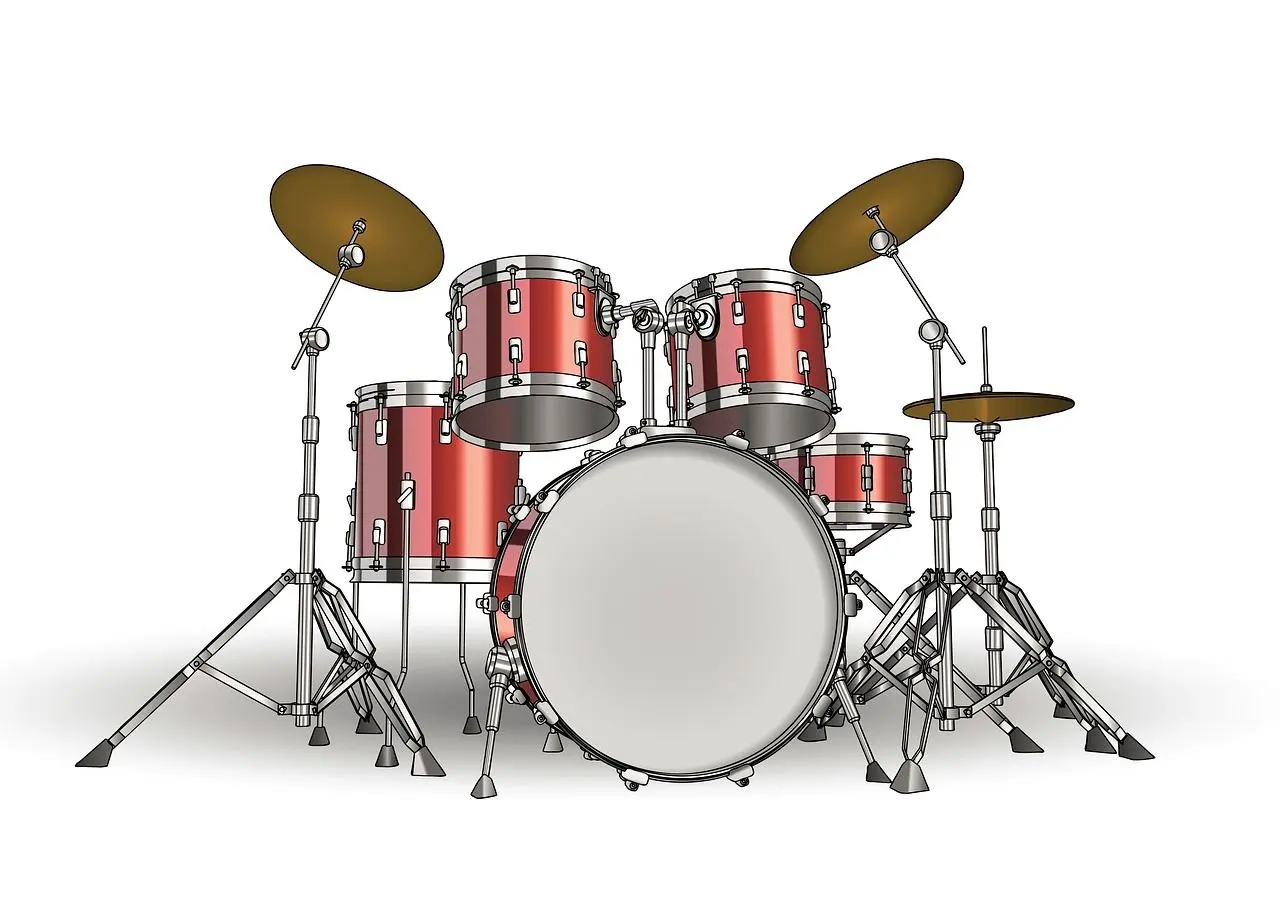
- Membranophones make sound mainly through a vibrating membrane, and the group includes all drums.
These descriptions come from the Hornbostel-Sachs page and the list of membranophones.
Older schemes were simpler. In the 14th century Jean de Muris divided all instruments into three classes: percussion, string and wind. Hornbostel-Sachs builds on that idea but abandons the high-level percussion group, replacing it with idiophones and membranophones, as the classification page describes.
Percussion in the orchestra and beyond
The orchestral section most commonly holds the timpani, snare drum, bass drum and tambourine, which are membranophones, plus cymbals and triangle, which are idiophones. Wikipedia’s percussion entry adds that the section can also contain aerophones, such as whistles and sirens, or a blown conch shell.
Players and composers also group the section by role. The classification page says this underlies the division into auxiliary percussion, tuned percussion and timpani.
Percussion has not always been a big part of orchestral writing. Most classical pieces for full orchestra since the time of Haydn and Mozart place emphasis on the strings, woodwinds and brass, and timpani mostly provide additional accents when needed.
In the 18th and 19th centuries, extras such as the triangle or cymbals appeared, again generally sparingly. Percussion became more frequent in 20th century classical music, according to the same entry.
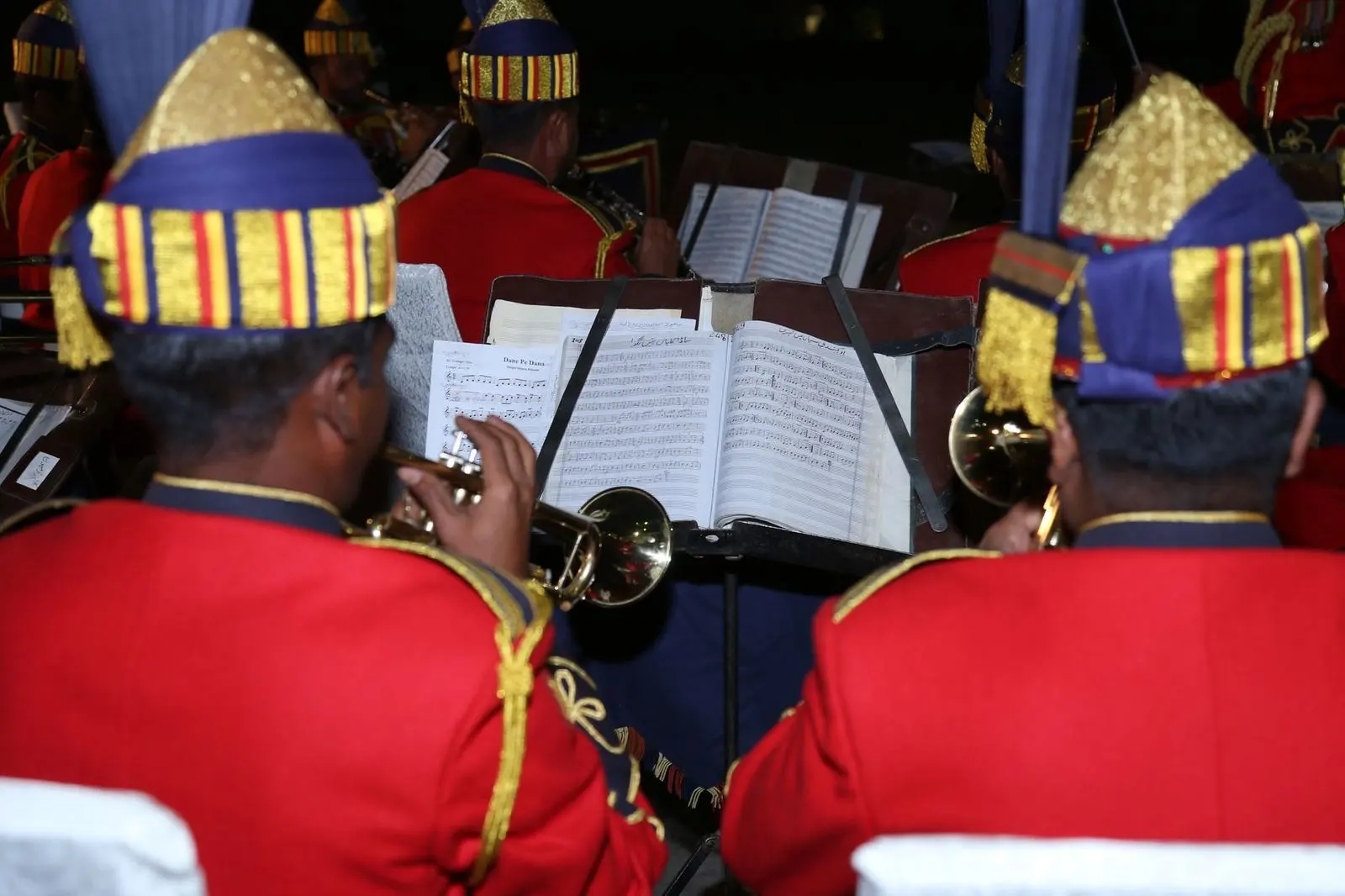
Outside the concert hall, the role is often practical. In military marching bands and pipes and drums, the bass drum keeps soldiers in step at a regular speed, while the snare gives the tune its crisp, decisive air, as that entry puts it.
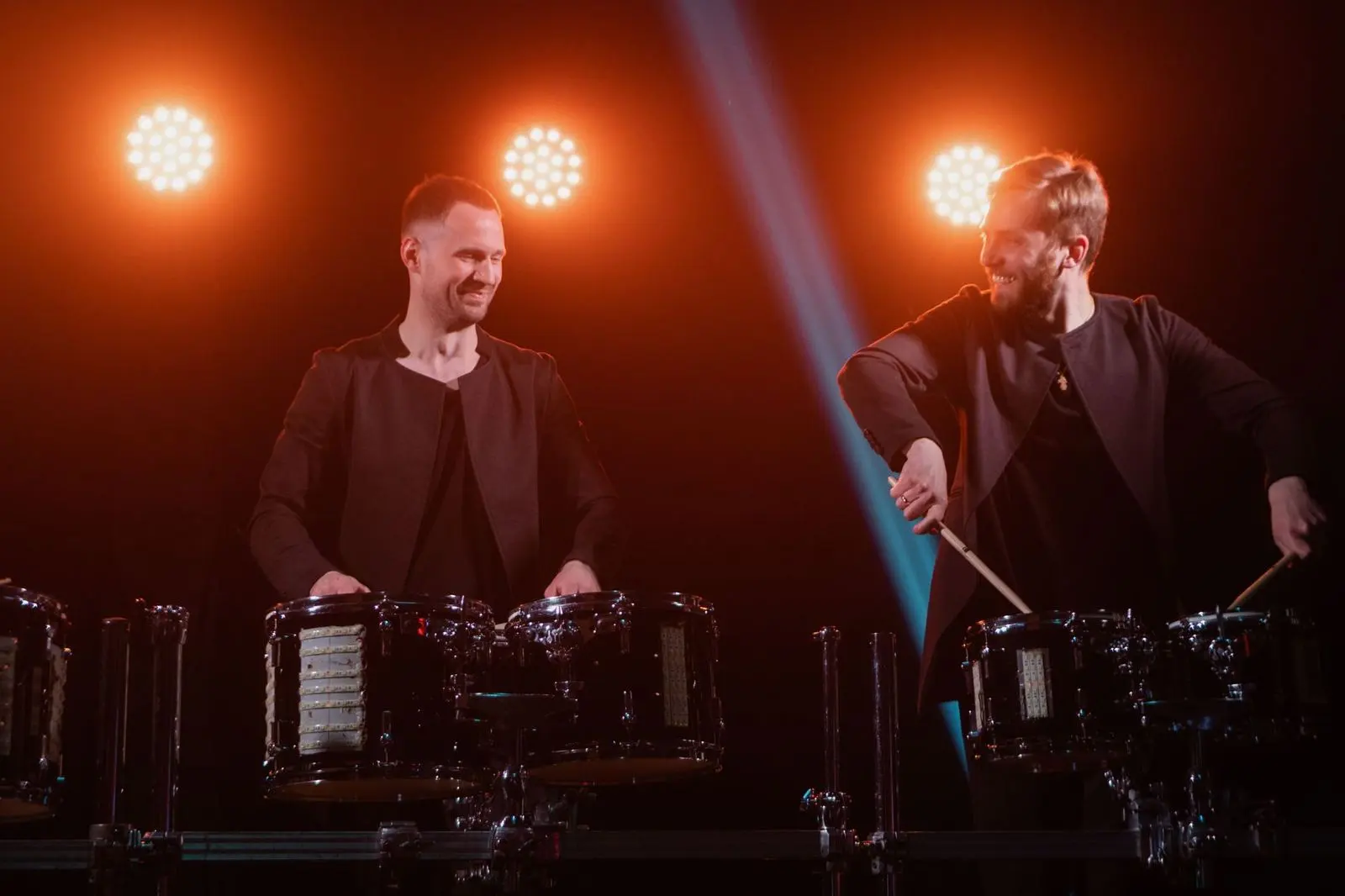
Because of the diversity of percussive instruments, large ensembles can be made up entirely of percussion, per the same source. A different family works by setting a column of air in motion with the lips, which is why brass instruments sit apart from percussion in the usual Western grouping.
Grey areas at the edges of the family
Percussion is a very common term, but it is not a systematic classificatory category in organology. The percussion entry shows that percussion instruments may belong to the classes of idiophone, membranophone, aerophone and chordophone.
The piano shows the problem well. It has strings, but they are struck by hammers, so it is not clear whether it counts as a string or a percussion instrument, according to the musical instrument classification page.
Authorities also differ over whether stringed instruments such as the hammered dulcimer, and keyboard instruments such as the celesta, are percussion at all, per the classification page. In orchestras, the celesta is not normally part of the percussion section, but the glockenspiel and xylophone are included because they do not have piano keyboards.
Hornbostel-Sachs adds a twist with castanets and cymbals used in pairs. They are not percussion in the Hornbostel-Sachs sense, yet they are percussion instruments in every other sense, as the same page points out.
People also sort percussion in other ways, which is why the overlap is so common:
- By how the sound is produced, as Hornbostel-Sachs does.
- By musical usage, such as pitched versus unpitched.
- By how the instrument is played, such as mallet or hand percussion.
- By origin or tradition, for example Latin percussion or African drums.
These four approaches come from the classification page. If you are deciding where to begin, our guide to the best instrument to learn first looks at options across all the families.
Frequently asked questions
Is a piano a percussion instrument?
Show answer
Opinions differ. Because the hammers hit the strings, some sources label it percussion, while many schemes give keyboards a category of their own, as the musical instrument classification page describes.
What is the difference between pitched and unpitched percussion?
Show answer
Think of notes versus rhythm. Pitched instruments give you specific notes you can write on an ordinary staff, while unpitched ones are written in rhythm notation, as Wikipedia explains.
Are all drums membranophones?
Show answer
In Hornbostel-Sachs, yes: the membranophone group covers all drums, because their sound comes mainly from a vibrating skin. Idiophones, the other big percussion group, cover everything struck or shaken that is not a drum, according to the list of membranophones and the Hornbostel-Sachs page.
Does Hornbostel-Sachs use the word percussion?
Show answer
It does, but not as a headline group. The word appears much lower in the tree and in an esoteric sense unlike everyday usage, according to the classification page.