Wondering where jazz came from? The history of jazz starts in New Orleans as the new century began, where ragtime, blues and marching bands blended into improvised music, then grew into swing, bebop and fusion.
This page belongs to the music history section of Ellipsis Music.
| Milestone | Key fact |
|---|---|
| Buddy Bolden forms his own band | 1895 |
| Kid Ory records “Ory’s Creole Trombone” | 1921 |
| Great Migration | More than a million African Americans, between 1910 and 1930 |
| Swing Era | Between 1935 and 1946 |
| Typical big band size | About 18 musicians |
| Start of the recording ban | August 1942 |
These figures come from the National Park Service and an ANU explainer. Dates and counts can change as research develops, so check the sources before you rely on them.
How did jazz begin in New Orleans?
Jazz did not appear from nowhere. The National Park Service describes a city where French, Spanish, African, Italian, German and Irish communities all found common cause in music during the nineteenth century.
One textbook places the start of the musical conversation around 1900. It lists ragtime, blues, gospel, marching band, classical, Caribbean and African music among the ingredients, as the Music Appreciation text explains.
An ANU lecturer adds that musicians fused West African traditions with European harmonic structures. They also played military band instruments left in pawn shops after the American Civil War.
Three streams fed the new sound:
- Ragtime: Scott Joplin, “the King of Ragtime”, popularised jagged rhythms that included the habañera from Cuba.
- Blues: WC Handy, the “Father of the Blues”, travelled through Mississippi collecting and publishing folk songs in versions of the blues form.
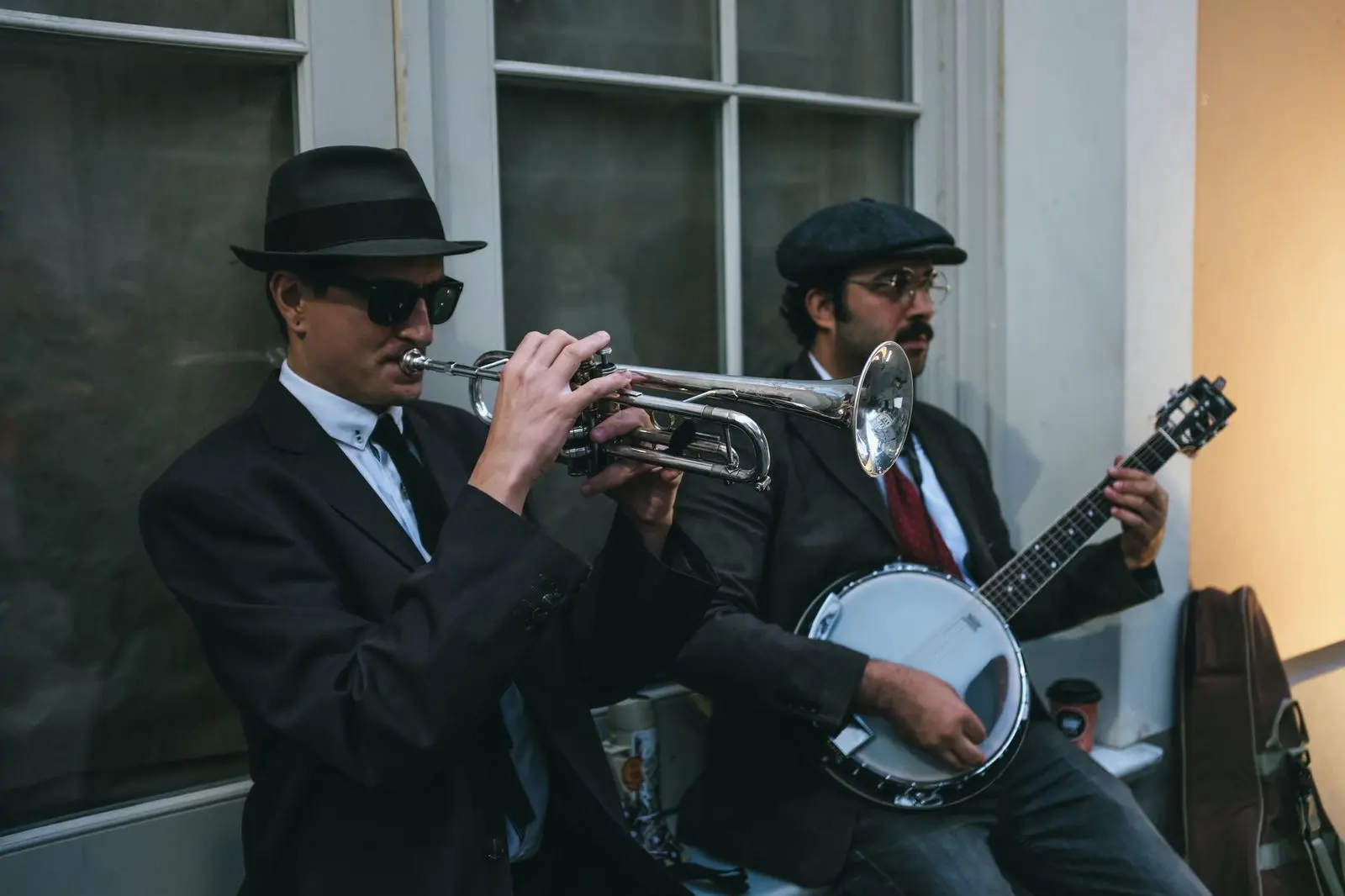
- Dance bands: New Orleans groups borrowed from both brass marching bands and string bands.
For a contrast with a much older world of sound, you can explore medieval music in a separate guide.
Early bands, Buddy Bolden and Kid Ory
Cornetist Buddy Bolden formed his own group in 1895 and spent the next decade building a loyal following among dancers, according to the National Park Service. In 1906 he collapsed during a street parade, and the following year he entered a state sanitarium, where he stayed for the rest of his life.
By the turn of the century, the typical dance band had a particular shape, as the NPS history describes:
- A front line of cornet, clarinet and trombone.
- A rhythm section of guitar, bass and drums.
- A repertoire that moved from polite waltzes toward the livelier sounds dancers wanted.
Musicians increasingly moved away from sight-reading toward playing by ear. That is a sharp turn from the written tradition traced in our history of music notation, and it led to a style of blended improvised parts called “collective improvisation”.
Edward “Kid” Ory shows how the scene matured. In 1901, while still a teenager, he was leading a band of his own, and in 1907 he took his Woodland Band into New Orleans. His group became an incubator of black jazz talent, and in 1921 he became the first black New Orleans jazz bandleader to record, with “Ory’s Creole Trombone”. You can read the full account on the NPS site.
Migration, recordings and the spread of jazz
Jazz left New Orleans partly because its players did. The National Park Service notes that during the First World War (1914-1919) musicians began to travel extensively. Their bands often struggled to win over audiences in Chicago, New York and Los Angeles at first.
Records helped. Jelly Roll Morton claimed to have invented jazz in 1902 and promoted the New Orleans sound through new recording technology. By the time he recorded “Black Bottom Stomp” in 1926, the music had reached Chicago, according to the ANU explainer.
The same source links the music’s growth to a larger social shift. Storyville closed in 1917, and the Great Migration carried more than a million African Americans from the rural South to major cities between 1910 and 1930. Together with recording technology and Prohibition, that movement brought jazz to a far larger black and non-black public.
In this period Louis Armstrong changed how jazz was played. Instead of several musicians weaving melody lines at once, the music moved to a soloist-plus-ensemble format, a change the Music Appreciation text compares to classical music’s move from polyphony to homophony.
The Swing Era and the big bands
The Swing Era ran between 1935 and 1946, and during it the small combos gave way to big bands of about 18 musicians, as the ANU explainer puts it. This was dance music, and the leaders became household names.
The ANU article singles out these figures:
- Duke Ellington, whom some regard as the greatest composer in jazz history.
- Count Basie, Woody Herman, Artie Shaw, Glenn Miller and Tommy Dorsey.
- Benny Goodman, who led a racially integrated band in 1938.
The Music Appreciation text adds singers Billie Holiday and Ella Fitzgerald to the roll call, and calls Goodman the “King of Swing”. You can find the list in its chapter on jazz styles.
Bebop and the birth of modern jazz
In the early 1940s, many black musicians resented the success of white bands. Led by Charlie Parker and Dizzy Gillespie, they returned to the virtuosic combo setting, says the ANU explainer.
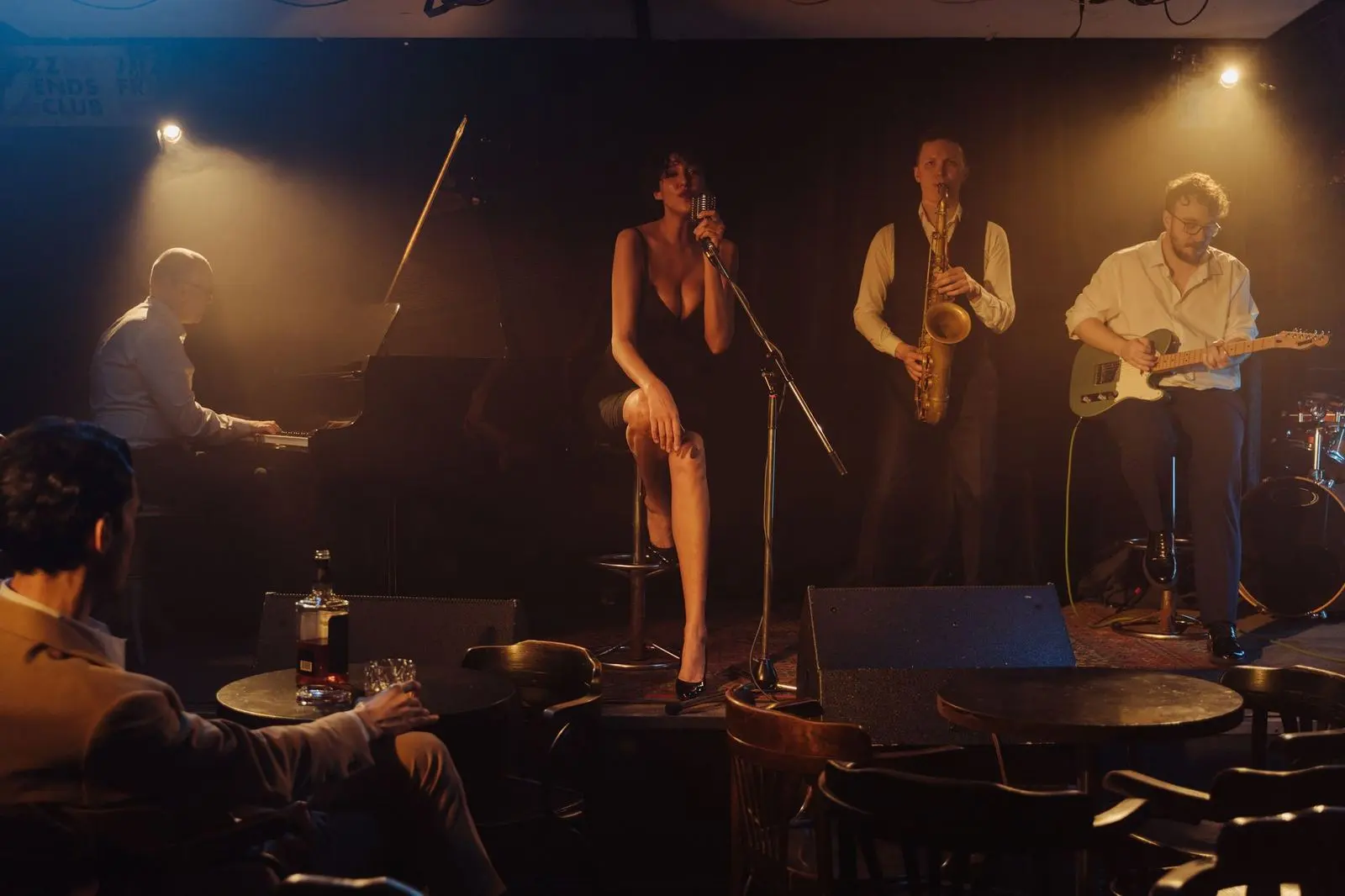
The result, bebop, was faster and more complicated than anything before it. For the first time jazz audiences sat down and listened, and the music moved from dance halls into smoky bars. One textbook calls bebop the beginning of modern jazz.
Players from the big bands often jammed in small clubs such as Minton’s Playhouse until the early morning. Pianist Thelonious Monk and Bud Powell joined Parker and Gillespie in the bebop circle.
Then came a pause. Starting in August 1942, a musicians’ union ban on new commercial recordings lasted for more than a year, and almost no instrumentalists could record. Singers were exempt, so audiences grew used to vocal pop, and the ANU article sees this as the split between jazz as art music and popular song.
Hard bop, modal jazz and fusion
After bebop, jazz branched out in the 1950s into hard bop and modal jazz. Hard bop added a little rhythm and blues and gospel, while modal players improvised on a scale, or mode, instead of playing off chords.
The Music Appreciation text names Miles Davis’s album Kind of Blue as the pinnacle of modal jazz. Free jazz followed, aiming to explore the music with few restrictions.
Fusion became a popular style in the 1970s. It began with the Miles Davis recordings In a Silent Way and Bitches Brew, and many players on Bitches Brew went on to form bands of their own.
Frequently asked questions
Where did jazz start?
Show answer
In New Orleans. Just after the new century began, jazz emerged alongside ragtime, blues, spirituals, marches and Tin Pan Alley songs, according to the National Park Service.
Who was the first jazz musician?
Show answer
Buddy Bolden is the earliest name tied to jazz in one university textbook. It adds that players of his day would have been labelled ragtime musicians, and that Jelly Roll Morton, King Oliver, Sidney Bechet and Louis Armstrong followed in the first generation.
What is the difference between swing and bebop?
Show answer
Swing meant big bands, tight arrangements and dancing. Bebop asked listeners to sit still while soloists improvised, as the Music Appreciation chapter explains.
What is jazz fusion?
Show answer
Fusion mixes jazz with rock and rhythm and blues and relies on electric instruments, as described in the same textbook.