Not sure what Renaissance music actually is? It’s the smooth, interwoven polyphony that European composers developed between the medieval and Baroque eras. Here you’ll find its periods, composers and instruments.
This guide is one stop in our wider look at music history, where each era gets its own page.
| Item | Value |
|---|---|
| Early Renaissance music | 1400-1467 |
| Middle Renaissance music | 1467-1534 |
| Late Renaissance music | 1534-1600 |
| Music printing begins | Early 1470s |
| English Madrigal School | Mostly 1588 to 1627 |
These dates come from the SUNY Music Appreciation course at Lumen Learning. Period boundaries are approximate and sources can change, so check the source before you rely on them.
How Renaissance music developed in three stages
The era is easiest to follow as early, middle and late stages, using the dates in the Lumen Learning chapter.
Early Renaissance, 1400-1467
Across 1400-1467, composers gradually dropped the late medieval period’s complex isorhythm and extreme syncopation, as the Lumen Learning chapter explains. The result was a more limpid and flowing style. Rhythm gained fresh vitality too, with a “drive to the cadence” becoming prominent around mid-century.
To see what these composers were moving away from, read our guide to medieval music.
Middle Renaissance, 1467-1534
In the early 1470s, music started to be printed with a printing press. A printed piece reached a larger audience than any manuscript could, and it did so far more cheaply, according to Lumen Learning.
Toward the end of the fifteenth century, sacred polyphony grew more intricate again in the masses of Johannes Ockeghem and Jacob Obrecht. Ockeghem was fond of canon, and his Missa prolationum derives all its parts from one musical line.
Early in the sixteenth century the trend turned toward simplicity. Josquin and his Franco-Flemish contemporaries favoured points of imitation and duet or trio sections inside textures of five and six voices, and they added longer passages of homophony to underline important text.
Late Renaissance, 1534-1600
From about 1534 until around 1600, Venice developed a polychoral style that placed choirs, brass and strings in different spatial locations in the Basilica San Marco. Lumen Learning says it gave Europe some of the grandest, most sonorous music composed up to that time.
The composers who defined Renaissance music
Classical Music magazine’s March 2024 guide to the best Renaissance composers is a handy map of the field, and the names below draw on it.
The Franco-Flemish school
Josquin des Prez (c.1450-1521) is described by Classical Music magazine as the most famous Renaissance composer of the Franco-Flemish school and a master of polyphony. Johannes Ockeghem had a profound influence on Josquin and the composers who followed, even though only a small number of his scores survive.
Orlando de Lassus was the chief Franco-Flemish voice of mature polyphony, writing both sacred and secular music. His best-known work is probably his 1584 collection of penitential psalms, the Psalmi Davidis Poenitentiales, the same guide notes.
Italian masters
Giovanni Pierluigi da Palestrina (c.1525-1594) is widely regarded as the great master of the polyphonic style. As of Classical Music magazine’s March 2024 guide, his Missa Papae Marcelli is still regularly sung in Catholic churches around the world.
Claudio Monteverdi (1567-1643) lived through the shift from Renaissance to Baroque, and his biggest mark was on opera. He served at the court of Mantua and then as maestro di cappella at San Marco in Venice, and his works include L’Orfeo and the Vespers of 1610, per the magazine.
Carlo Gesualdo (1566-1613), an Italian composer-prince, wrote some of the wildest, most experimental chromatic harmonies ever conceived. You can hear them most clearly in his madrigals, as Classical Music magazine describes.
English composers
Thomas Tallis (1505-1585) served in the courts of Henry VIII, Edward VI, Mary I and Elizabeth, adapting his style to each monarch’s demands. His motet Spem in Alium is written for eight five-voice choirs, according to Classical Music magazine.
William Byrd (1543-1623), Tallis’s pupil, wrote for every medium of his day except the lute. Among his best-known works is the motet Tristitia et anxietas from his Cantiones Sacrae of 1589, the guide says.
Orlando Gibbons (1583-1625) is often seen, like Monteverdi, as standing at the crossroads of the Renaissance and Baroque eras. His five-voice madrigal The Silver Swan is among his most famous works, per Classical Music magazine.
Masses, madrigals and other Renaissance styles
Masses of the fifteenth and sixteenth centuries drew on monophonic or polyphonic sources. They were elaborated through cantus firmus practice or, from some time around 1500, through pervasive imitation, as Lumen Learning lays out.
That produced four types of mass:
- The cantus firmus mass, also called the tenor mass
- The cantus firmus/imitation mass
- The paraphrase mass
- The imitation mass, also called the parody mass
In a cantus firmus mass, one monophonic melody, usually taken from chant, sits in the tenor. It most often moves in longer note values than the other voices.
The Council of Trent discouraged excessively complex polyphony because it made the text harder to understand. Palestrina partly reacted to those strictures with a freely flowing counterpoint in which consonance followed dissonance almost beat by beat, according to Lumen Learning.
Palestrina belonged to the Roman School, a group of mainly church composers with ties to the Vatican and the papal chapel. Stylistically they are often set against the more progressive Venetian School.
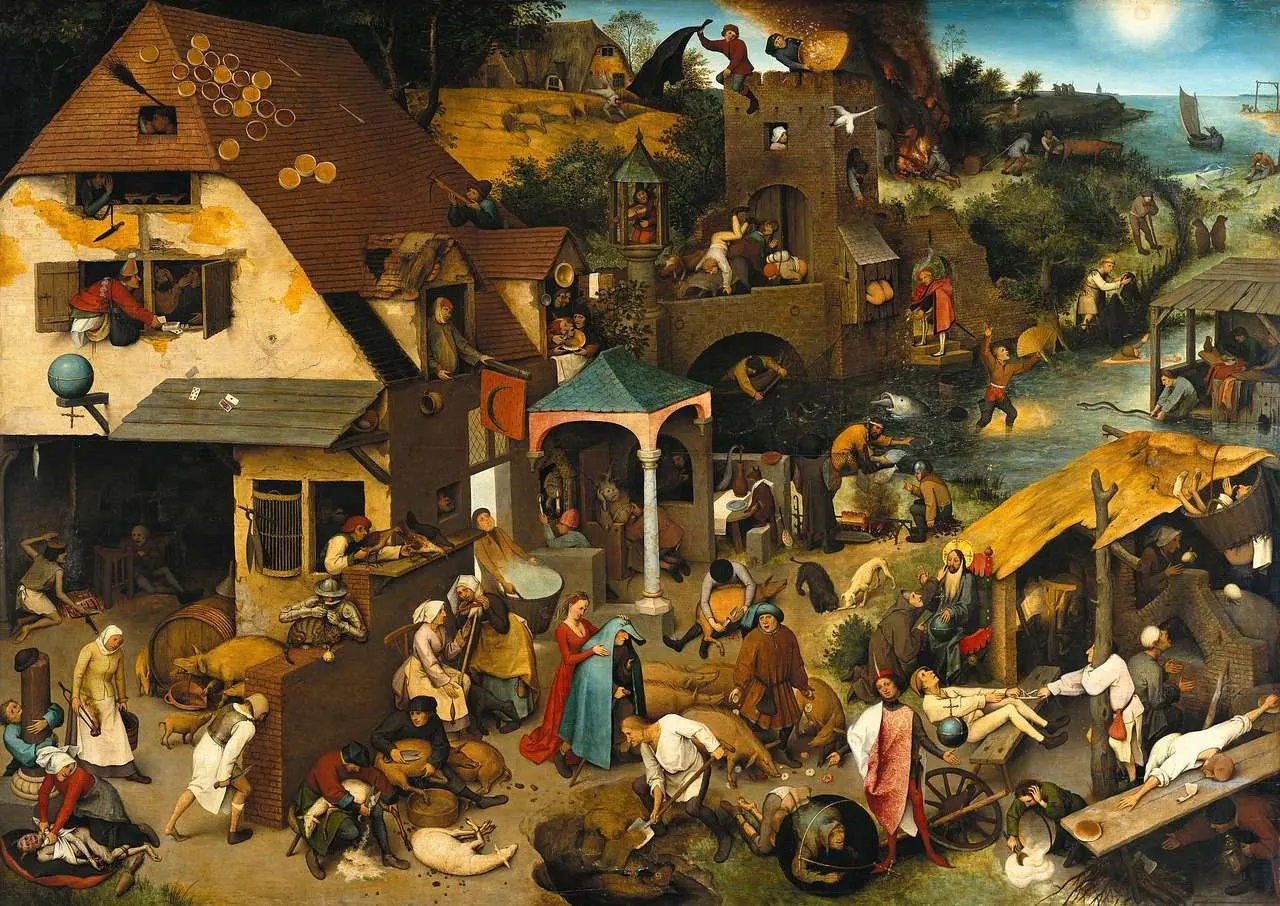
The English Madrigal School flowered briefly but intensely, mostly from 1588 to 1627, per Lumen Learning. Its pieces were sung without instruments and were generally light in style. They often began as copies or direct translations of Italian models, and most were for three to six voices.
As the era closed, a manneristic style grew up in secular music, especially the madrigal. It moved toward complexity and extreme chromaticism in the madrigals of Luzzaschi, Marenzio and Gesualdo, and the term itself comes from art history.
Which instruments shaped Renaissance music?
Voices dominate the sources behind this page, so instruments appear only in passing. The notes below stick to what those sources actually name.
During the middle stage, a tradition of famous makers began for many instruments, and Neuschel was singled out for his trumpets, says Lumen Learning. Other instruments turn up in the composers’ stories:
- Brass and strings joined multiple choirs in Venice’s polychoral music.
- Virginal and organ featured in the English keyboard music of William Byrd.
- Viol consort was the setting for Byrd’s progressive instrumental pieces.
- Lute was the one medium Byrd is said to have skipped.
The Classical Music magazine guide is the source for the keyboard, viol and lute details.
How Renaissance music led into the Baroque
In Florence, a group known as the Florentine Camerata tried to revive the dramatic forms of Ancient Greece through monody, declaimed music over a simple accompaniment. It was a stark contrast with polyphony and, at the outset, mainly a secular trend, according to Lumen Learning.
Many composers in the early seventeenth century kept two modes side by side: the prima pratica in Renaissance polyphonic style and the seconda pratica in the new style. Our guide to baroque music picks up the story from there.
Renaissance music beyond Europe
European music reached the Americas in the sixteenth century, soon after the Spanish arrived, and uniquely Mexican hybrid works appeared very early. Composers there included Hernando Franco, Antonio de Salazar and Manuel de Zumaya, per Lumen Learning.
Frequently asked questions
When was the Renaissance music era?
Show answer
Joining the three stages together gives a span from 1400 to 1600, ending with Venice’s grand choral style, as the Lumen Learning chapter lays out.
Which composers should you hear first?
Show answer
Try Josquin for early polyphony, Palestrina for a smooth sacred sound, Tallis for huge choral scale and Monteverdi for the bridge to opera. All four appear in Classical Music magazine’s guide.
Did Renaissance madrigals need instruments?
Show answer
Not the English ones: they were written for unaccompanied voices, usually for three to six voices, according to Lumen Learning.
Why did Palestrina favour clearer counterpoint?
Show answer
Church leaders meeting at Trent worried that tangled vocal lines hid the sacred words. Palestrina, partly reacting to those strictures, favoured a clearer flow, as Lumen Learning describes.