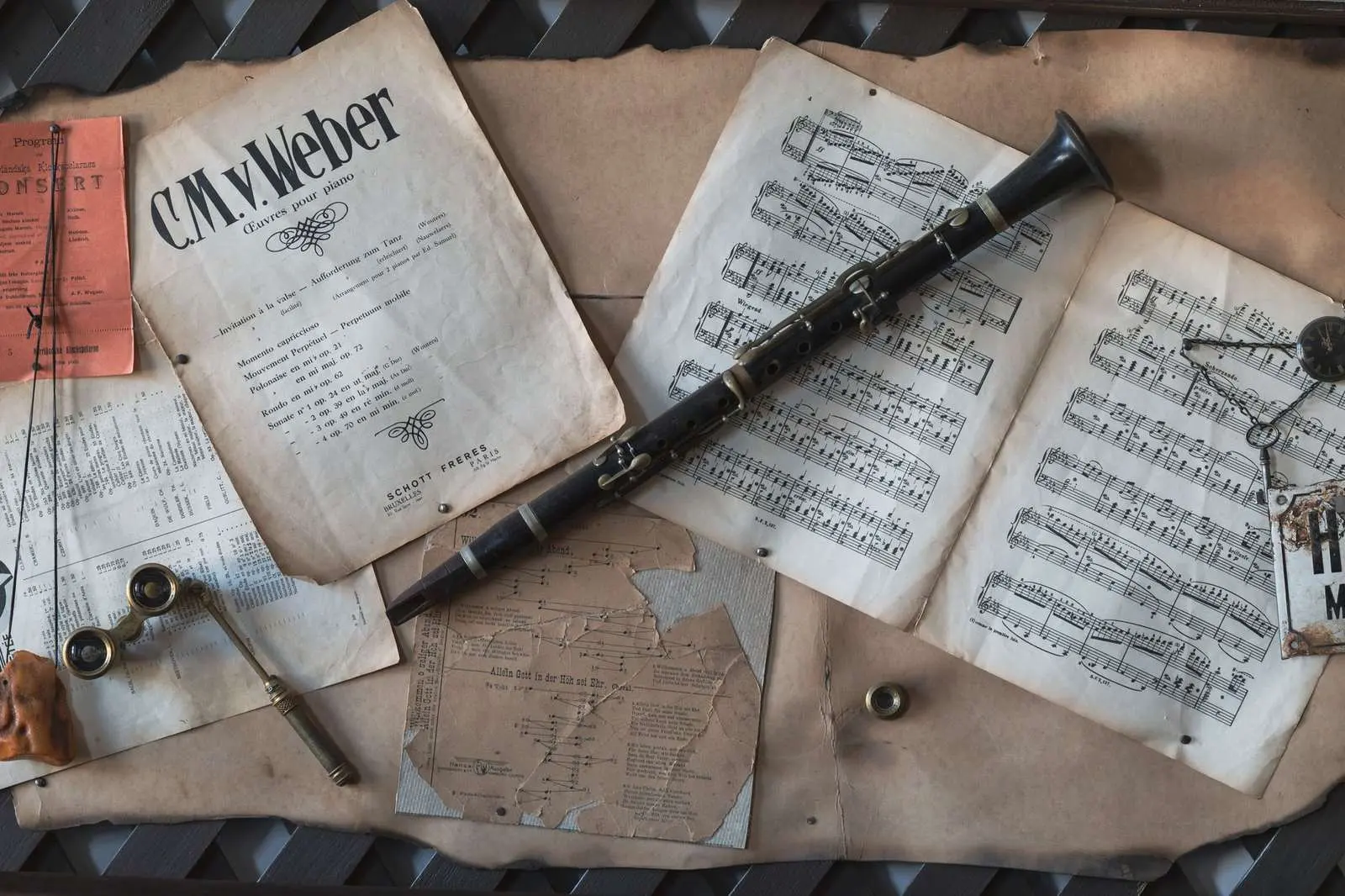
Puzzled that a B-flat clarinet’s written C doesn’t sound like your piano’s C? That’s how transposing instruments work: the music is written at a different pitch than it sounds, so fingerings stay the same across an instrument family.
This guide sits inside our wider coverage of musical instruments, so you can browse related topics once the basics here click.
| Item | Value |
|---|---|
| Written C on a B-flat clarinet | Sounds concert B-flat, one whole step lower |
| Written C on a clarinet in A | Sounds concert A, one minor third lower |
| Horn in F (treble clef) | Sounds a perfect fifth below written pitch |
| Double bass | Sounds one octave lower than written |
| Glockenspiel | Sounds two octaves higher than written |
These figures come from Wikipedia’s article on transposing instruments and Noteflight’s explainer on instrument transposition. Sources get revised, so check them before you rely on the figures.
What transposing instruments actually do
A transposing instrument is one whose written notes differ from the notes you hear. The reference point is concert pitch, the pitch of a non-transposing instrument such as the piano, and a transposing part is simply not notated there (Wikipedia).
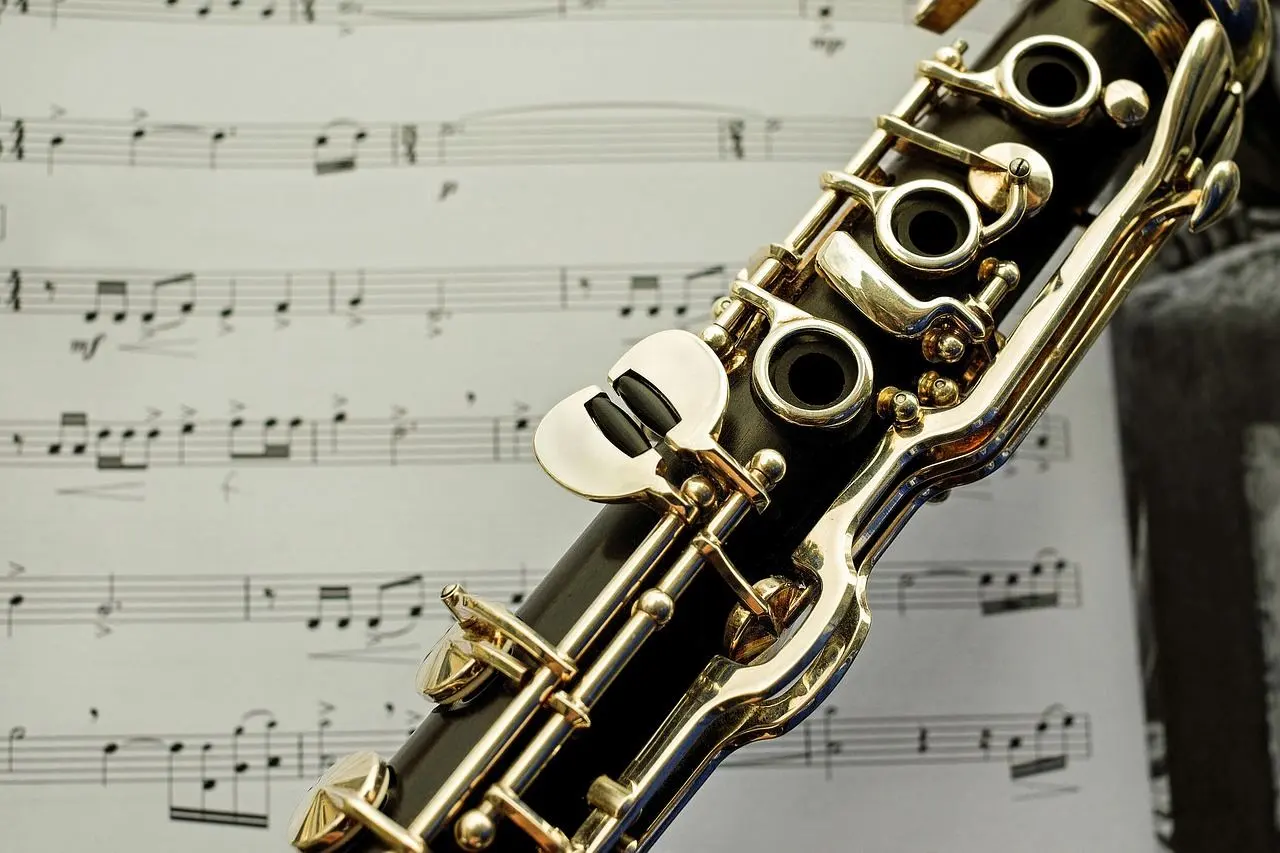
The instrument’s name tells you the shift. When a clarinet or soprano saxophone plays a written C, the sound is a concert B-flat, so both are called B-flat instruments (Wikipedia).
Instruments that need no shift are called instruments in C. The Steps to Music Theory textbook lists the piano, violin, viola, cello, flutes, oboes, bassoons and percussion as examples, so for these players written pitch and sounding pitch match (Steps to Music Theory).
Nothing about the instrument itself changes the music. The difference between a transposed score and a concert pitch score is only in how it looks, which makes notation the whole story (Noteflight).
Why do transposing instruments exist?
The main reason is practical. When players learn a fingering, they can transfer the same fingering to other instruments in the family (Steps to Music Theory).
Without that convention, clarinetists would be expected to learn different fingerings for each instrument in the family (Steps to Music Theory). History adds several more layers:
- Horn crooks: beginning in the early 18th century, a system of crooks was devised in Germany so one instrument could change its fundamental by adding tubing (Wikipedia).
- A “natural” C: it makes some logical sense to call the fundamental pitch of every instrument C, whatever the actual sounding pitch (JMU Brass Pedagogy).
- Pitch standards: in many of Bach’s cantatas, the organ part is notated a full step lower than the other instruments (Wikipedia).
- Habit: there is a long history of transposing instruments and a lot of music written for them, so keeping the system is easier than changing it (JMU Brass Pedagogy).
Common transpositions you will meet
Some instruments are made in a variety of sizes, and the larger versions play lower. Clarinets, flutes, saxophones and trumpets all follow this pattern, and the family key names which size you have (Wikipedia).
That key name refers to the concert pitch heard when a written C is played on the instrument in question (Wikipedia). A few of the most common cases:
- Clarinet in A: a written C sounds as A, one minor third lower (Noteflight).
- Horn in F: sounds a perfect fifth below written pitch in treble clef, a convention that became standard in the early 19th century (Wikipedia).
- Beginner brass: at the start, you typically deal with only two transpositions, B-flat and F (JMU Brass Pedagogy).
Bass-clef horn parts need extra care, because composers differed in whether they expected a drop of a fifth or a rise of a fourth (Wikipedia). When you meet one, check the composer’s convention before assuming.
Instruments that transpose at the octave
Some instruments sound the same letter name as written, only in a different octave. Their music may be written one or two octaves away from concert pitch to avoid excessive ledger lines (Wikipedia).
The three standard examples show how this works in both directions:
- Double bass: sounds an octave lower than written.
- Piccolo and celesta: sound an octave higher than written.
- Glockenspiel: sounds two octaves higher than written.
All three come from the same Wikipedia passage. This is called octave transposition, and it never changes the key you read in.
How to read a transposed part
Reading a transposed part is a short routine once you know the interval. Follow these steps for any B-flat, A or F instrument:
- Find the instrument’s key name, since it tells you which concert pitch a written C produces (Wikipedia).
- Recall the interval: down a whole step for B-flat, down a minor third for A, and down a perfect fifth for F.
- Move each written note by that interval. On a B-flat clarinet, a written G will sound like an F, and a written C-sharp will sound like a B-natural (Noteflight).
- Shift the key as well. A melody in C major played by a B-flat clarinet sounds a major second lower than written, so you hear B-flat major (teoria.com).
A real score shows the effect clearly. In a Farrenc trio example, the clarinet’s key signature has one flat while the cello’s and piano’s have three flats, and the clarinet’s written A sounds as G (Steps to Music Theory).
The same thinking works in reverse when you write for these instruments. Start from the concert pitch you want, then shift the opposite way to find what the player should see.
Scores, rehearsals and where to go next
Transposition is a real day-to-day task for conductors and teachers. A teacher using a transposed score has to convert the written notation to concert pitch to judge chord structures and accuracy of parts (JMU Brass Pedagogy).
Even tuning at the start of a rehearsal makes players interpret the correct note to play, and the B-flat trumpeter plays a B (JMU Brass Pedagogy). This is why concert pitch becomes the shared language of the room.
If you are still choosing an instrument, our guide to the best instrument to learn first puts transposition in context with other factors. For a wider map of where woodwinds and brass sit, see how instrument families are grouped.
Frequently asked questions
Why not write every part in concert pitch?
Show answer
Players would have to relearn what each fingering means, since it would be confusing to read different pitches and key signatures for the same fingering (Noteflight). Concert pitch is handy for a conductor’s overview, but individual parts stay transposed.
Why is it called a B-flat clarinet?
Show answer
The label describes what you hear, not what you read. It names the sound produced by a written C on that instrument (Wikipedia).
Does the guitar transpose?
Show answer
Yes, but only at the octave. Guitar, bass guitar, double bass and contrabassoon all sound an octave lower than written (Wikipedia).
Do trombones transpose?
Show answer
Beginner trombones, bass-clef euphoniums and tubas are pitched in B-flat, yet the notes they read sound at concert pitch (JMU Brass Pedagogy). They are the brass exception to the B-flat rule.